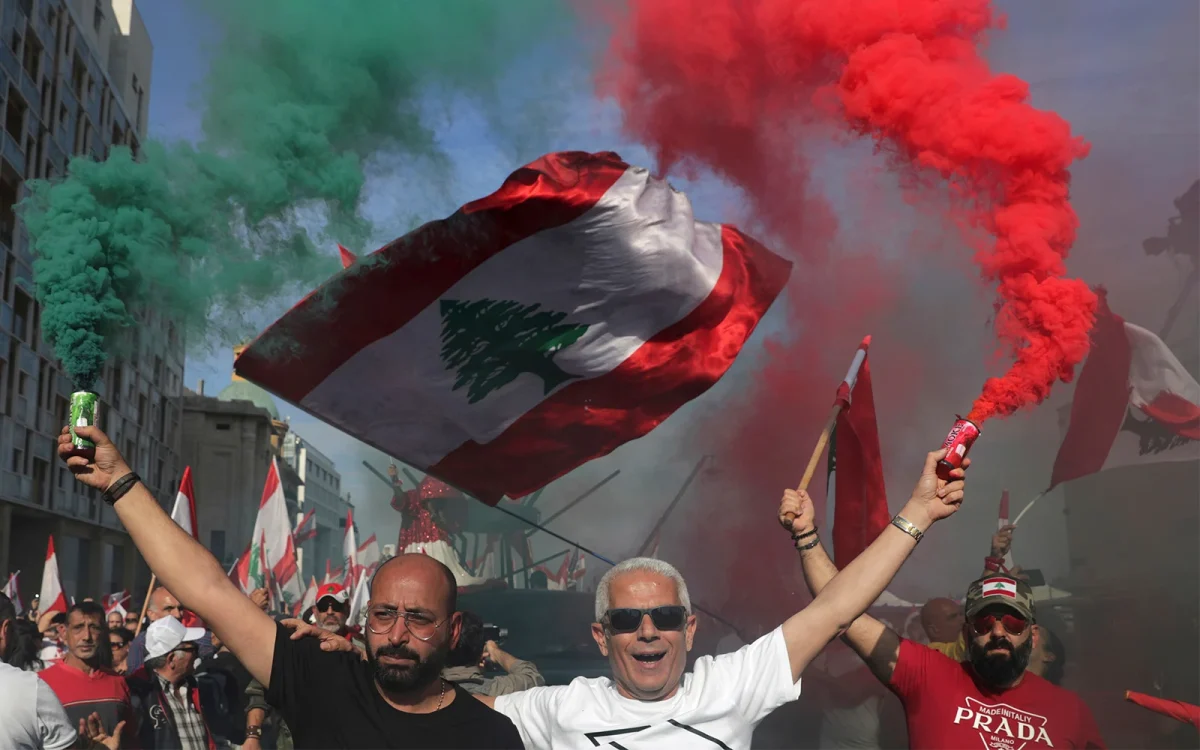
Every year on November 22, the entire country is filled with joy and gaiety as people recall the day Lebanon gained independence. It is an exciting day for every Lebanese student, filled with dancing and celebration, dinners, no school work, and pride. It is one of the very few days off from the school year, seeing as the Lebanese school curriculum is strict. A bright and early morning with the infamous Independence Day parade—an official military parade in Beirut, accompanied by national celebrations like fireworks, concerts, and public gatherings. The streets are adorned with the Lebanese flag, and official ceremonies honor national heroes, while civilians also participate through marches and events celebrating Lebanese culture.
The national holiday commemorates the country’s emancipation from the French Mandate, which had been in place over Lebanese territory for almost 23 years, after being administratively ruled by the Ottoman Empire from 1516 to 1918. The commander of French soldiers in the Levant at the time issued a directive setting the limits of Greater Lebanon, or ‘Grand Liban’, in 1920. The Grand Liban remained under the French Mandate until 1941. The Chamber of Deputies changed the Lebanese Constitution on November 8, 1943, after electing President Bechara El Khoury and selecting Prime Minister Riad al-Solh, thus unilaterally terminating the Mandate.
The French retaliated by arresting the president, prime minister, and other cabinet members and exiling them to Rashaya’s medieval fortress. This episode, which brought together Christian and Muslim views on the mandate, resulted in worldwide pressure calling for the release of the Lebanese leaders and enormous public protests. Finally, on November 22, 1943, France gave in to mounting pressure from the Lebanese people, as well as demands from several other countries, and freed the captives from Rashaya. This day has been commemorated as Lebanese Independence Day ever since.
It marks true independence from entrenched sectarian divides, ignorance, cowardice, and blind allegiance. The women and men on the street gave Independence Day real meaning.
While in the heart of Raleigh, North Carolina, Lebanese Independence Day is celebrated at the Triangle Lebanese American Center, known for preserving and promoting Lebanese culture and heritage, and for facilitating exchange among Lebanese, Americans, and other cultures through social, cultural, and humanitarian endeavors.
Evoking the same joyous and prideful emotions of Lebanese Independence Day, the TLAC celebrates with an extravagant dinner prepared by the special hands of the community’s mothers. The tables are adorned with miniature Lebanese flags and stickers. The president of the TLAC chapter, Carmena Ishak, delivered an honorable speech commemorating the organization’s achievements and milestones throughout the year and further expanding on the upcoming year’s goal, such as renovating the center to include a bigger dance practice area, and creating more opportunities for the community to unite, including movie nights, adult Arabic school, etc.
The youth Arabic school, known for its efforts to help learners acquire Arabic in a creative, fun environment, performed the heartfelt Lebanese national anthem during the dinner. Meanwhile, the school’s president, Rana Alawar, celebrated her first year on the board.
In an exclusive interview with the MHS Cattalk, Millbrook senior, Nader Zeitouni, expressed, “To me, it’s a reminder of our history and the fact that Lebanon still matters a lot to us, even if we don’t live there.”
Lebanese Independence Day, whether observed in the streets of Beirut or within the close-knit gatherings of the Triangle Lebanese American Center in Raleigh, remains a powerful reminder of the resilience, unity, and pride that define the Lebanese people. No matter how far from Lebanon its people may travel, the spirit of November 22 continues to unite generations, honoring a past built on struggle and courage.