

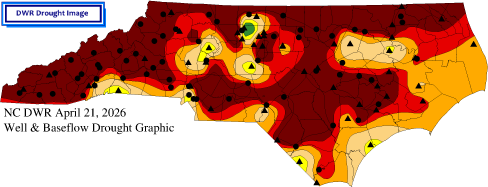
North Carolina has been experiencing one of the driest springs on record during the 2026 spring season. Precipitation over the whole of North Carolina has been close to 10 inches below the normal total rate for the past 6 months. North Carolina has fallen into a statewide drought. Rainfall stations throughout the state, including the Raleigh-Durham International Airport and Hickory Regional Airport, are even experiencing their driest six-month period in recorded history.
Through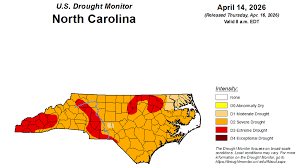 out 2026, North Carolina has been experiencing severe droughts and dry spells. According to the National Integrated Drought Information System (NIDIS), as of April 7, 2026, 100% of all 100 counties are currently experiencing some form of drought. The NIDIS classifies the severity of droughts into five categories: D0, abnormally dry; D1, moderate drought; D2, severe drought; D3, extreme drought; and D4, exceptional drought. The highest populated category is D2, with 77% of the state being in this zone.
As a result of the record-low precipitation rates across the state for the past 6 months and the absence of any predicted rain coming down in the near future, the state appears to be stuck in this drought for the foreseeable future.
The minimal rainfall, especially in rural areas, is having serious effects on many of the agricultural operations spread out over North Carolina. The water deficit that has occurred as a consequence of the drought has led to an expansion in the total water required to keep farms running. Rain had previously contributed to watering some crops, which cut down irrigation costs and kept the soil on the farmland healthy and fertile for planting. The insufficient amount of wet weather has resulted in a rise in dry farmland and a surge in the quantity of irrigation that is necessary for farmers to combat those dry areas. Some farmers in drier parts of the state are reporting that the ground is so hard and dry that they have to wet the ground before planting to even get crops in the soil. The additions to the process have caused a rise in operational costs for farmers as well. During an interview by WFMY News 2, Vaughn Willoughby, the owner of Pritchett Farm Nurseries and president of the Alamance County Farm Bureau, said, ¨Farming is tough enough already, and then you add this kind of weather on top of rising fuel and input costs. It’s not good for agriculture.¨
Other consequences of the drought include damage to the local ecosystems. Many of the streams and rivers winding through North Carolina are also experiencing record lows. The dryness of the ground and vegetation in combination with the rising temperatures is also contributing to a spiraling chance of wildfires, which would spread even more devastation across the state, affecting all of the people, animals, and plants that call North Carolina home. N.C. is currently under high to extreme fire danger warnings because of dried out vegetation combined with swelling heat.
There is a statewide burn ban enforced across all 100 counties as of March 28, 2026, to help prevent forest fires. Overall, the state is observing the situation and has placed restrictions on water from April 16 onward. Although the drought is severe, most counties have stocked reservoirs stored away in case of emergency outcomes such as these. State officials will continue to watch over the water levels and hope for rainy days. To escape this drought, the state would need heavy, sustained rainfall to escape the feedback loop the weather is actively trapped in.