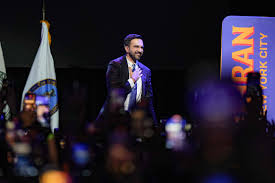
| The New York City political landscape has shifted dramatically since the recent election of 34-year-old democratic socialist Zohran Mamdani on November 4, 2025, making him the city’s youngest mayor in centuries. Mamdani has promised to reform the city through the use of new transit policies, economic changes, and a sharper focus on the lower class. While his victory shows a new era for America’s most iconic city, it also raises grave concerns for the validity of his goals.
Mamdani’s political background is rooted in contemporary American socialist ideas. His first-generation American background has helped him form a strong base of supporters who are feeling overshadowed by New York’s rising costs. He was born to Ugandan Indian immigrant parents, and his father, Mahmood Mamdani, is a globally recognized expert in African studies and political science. His work challenges Western politics and has shaped his son’s passion for justice and the removal of social inequality. His familial background has supported his push for policies that reduce reliance on private businesses, expand public education, and place heavy taxes on wealthy residents and corporations. His supporters argue that these proposals reflect a commitment to challenge the city’s economic hierarchy, while critics disagree, stating his plans fail to meet realistic financial expectations. For example, the free bus initiative is likely to remove hundreds of millions of revenue from the transit system each year, risking worsening the already problematic service issues. Numerous citizens argue that reliability and speed are the primary issues with public transportation. Steven Higashide, a transportation expert, stated that “the way you get people on the bus is by making it faster, more frequent, and more reliable.” Recent tax proposals have raised similar concerns, with a goal to raise corporate taxes by roughly four percent, and an additional two percent tax on incomes above one million dollars. Supporters are optimistic that the additional tax revenue would generate an additional nine billion dollars for the New York economy. Critics, however, warn that such dramatic tax increases would force the high-earning businesses and residents out of the city, which would ultimately shrink the tax base and harm working families who rely on stable city income. Mamdani’s recent interview with NBS revealed his ambition and his quiet approach in his preparation for his inauguration. Mamdani stated, “I will be proactive,” in regards to his plan for contacting President Trump before taking office. The political obstacles he will face are bound to be significant, for New York Governor Kathy Hochul has expressed intense skepticism about his free bus plan in particular. Hochul’s response to his plans suggests that members of his own party may be unwilling to provide funding for his elaborate ideas. The new mayor takes office amid a challenging period for New York. The city faces economic strain, rising costs, and recurring public safety and infrastructure concerns. Mamdani supporters argue that his position represents a push toward a more equitable future for the city’s population. However, many residents worry about the socialist-inspired nature of his policies, which though well intentioned, may not be compatible with the financial needs of a city as influential as New York. Skeptics fear the proposed programs will result in price increases, reduced investment in New York programs, and a decline in the quality of city services. This election marks a critical turning point in New York’s political landscape. Mamdani and his administration will determine whether a heavily polarized leadership structure is a reliable source for city government or whether the city will confront the limitations of socialist policies. The coming months will show whether his ideas represent a necessary change or if they will only place new burdens on a city already under strain. |