
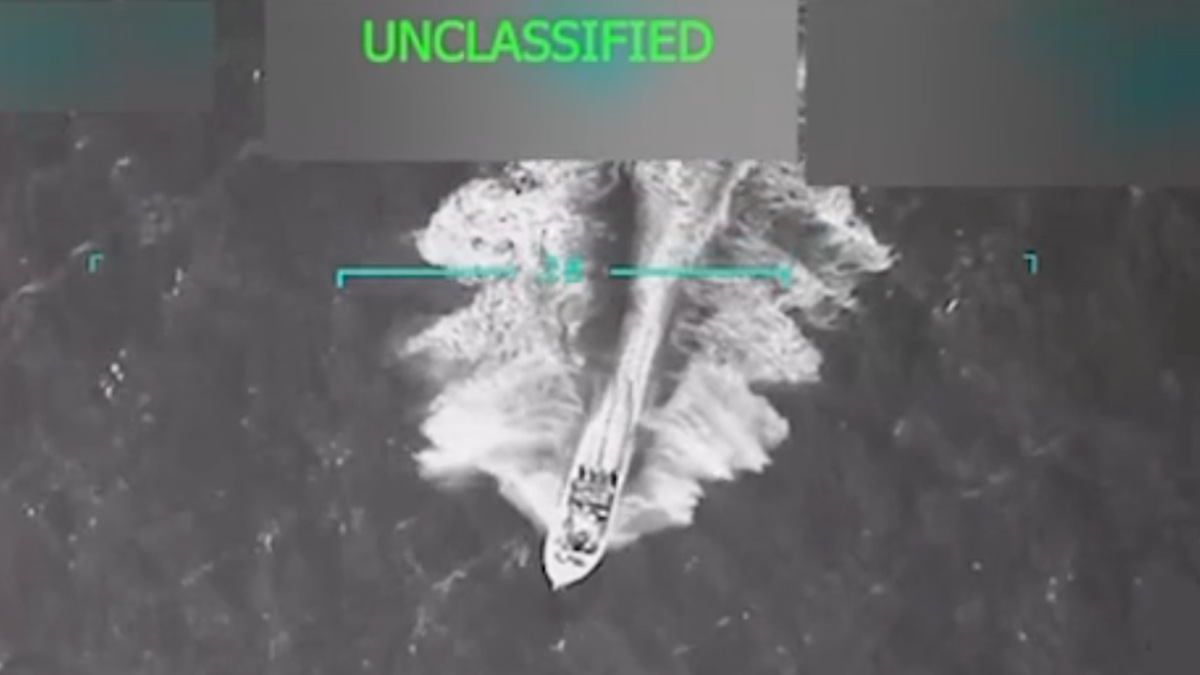
Since September 2, the U.S. government has launched a series of airstrikes in the Caribbean and eastern Pacific, killing 83 in what the War Department calls Operation Southern Spear. The strikes are intended to dismantle what the government refers to as “narco-terrorist” networks. As of December 2, there have been 21 kinetic strikes in the U.S. Southern Command’s area of operations. These airstrikes have been a subject of significant controversy, as accusations of war crimes and questions over the involvement of Defense Secretary Pete Hegseth have ensued.
The initial strikes targeted a Venezuelan group known as Tren de Aragua, who the U.S. classified as a foreign terrorist organization. The boat held 11 passengers, and after the first September 2 strike, another shortly preceded it with intentions of killing its two survivors. But, international laws of war protect survivors of enemy forces not engaged within battle. It’s even stated directly within the Pentagon’s Law of War manual, which reads, “Members of the armed forces and other persons … who are wounded, sick, or shipwrecked, shall be respected and protected in all circumstances. Such persons are among the categories of persons placed hors de combat; making them the object of attack is strictly prohibited.”
In November, The Washington Post published an article supplemented by seven people with knowledge of the operation about Pete Hegseth and Adm. Frank M. “Mitch” Bradley’s role in the ordering of the second strike. Two people claim that Hegseth gave the order to “kill everybody”. The Post also states that Admiral Bradley directly ordered the second strike in order to fulfill Hegseth’s directive. White House Press Secretary Karoline Leavitt has denied that the strike was directed by Hegseth, and Pentagon Press Secretary Kingsley Wilson affirmed this. Hegseth himself has also denied this to the press, and stated on X on November 28, “As usual, the fake news is delivering more fabricated, inflammatory, and derogatory reporting to discredit our incredible warriors fighting to protect the homeland.”
Both Democratic and Republican lawmakers were shown footage of the second strike in a briefing with military officials on December 4. The following Saturday, Rep. Jim Himes, a Democrat of Connecticut, stated in “Face the Nation with Margaret Brennan” that he believes the video should be made public, saying, “I think it’s really important that people see what it looks like when the full force the United States military is turned on two guys who are clinging to a piece of wood and about to go under just so that they have sort of a visceral feel for what it is that we’re doing.”
Republican Arkansas Senator Tom Cotton, also among lawmakers who viewed the video of the strike, stated to ABC Channel 7, “What is clear, they were not incapacitated, they were not distressed and the second strike in absolutely no uncertain terms did not constitute a war crime,” and “They may have been signaling to their drug trafficking partners to come rescue them. Admiral Bradley made the right decision under the circumstances.” Cotton later said he wouldn’t object to the video’s release, but that the judgement should come from Hegseth and the Pentagon.
Despite division on the video’s implications, both Republicans and Democrats who have seen the video seem to generally agree on it being released to the public, with John Curtis, a Republican senator from Utah, affirming this to CNN, and Democrat from Washington representative Adam Smith advocating for it to ABC.
After being asked about the possibility of the video being released, Hegseth told reporters, “We’re reviewing the process, and we’ll see. Whatever we were to decide to release, we’d have to be very responsible about reviewing that right now.”
Whether or not Americans get to see for themselves the U.S’s double-tap strike on September 2, it happening at all is enough to warrant uncertainty over the ethics of operating against non-violent crimes in this manner to begin with, and the act of killing survivors of conflict. While the U.S. administration has defended Operation Southern Spear as lawful under the rules of war, arguing that the United States is engaging in an armed conflict with drug traffickers it accuses of coordinating with Venezuelan President Nicolás Maduro, many legal experts dispute this framing, noting that drug trafficking, even at a transnational scale, does not constitute an armed conflict since the U.S. is not facing sustained attacks by an organized armed group.
United Nations experts stated, “International law does not permit the unilateral use of force abroad to fight terrorism or drug trafficking. Attacks on organised crime groups in foreign territory would violate the other country’s sovereignty and could amount to an illegal use of force under the United Nations Charter and customary international law.”
These experts urge the U.S. to independently investigate those who authorized and carried out the strikes, provide reparations to victims’ families, and investigate criminal activity within the means of international cooperation.