A North Carolina veteran was injured earlier this month during an anti- war protest at a U.S. Senate hearing in Washington, D.C., bringing national attention to an incident involving a former service member speaking out against military policy.
Brian McGinnis, U.S. Marine Corps veteran from N.C, interrupted a hearing of the United States Senate Armed Services Committee on March 4. The hearing was taking place on military and national security issues
During the hearing, McGinnis stood up and began announcing his protest of U.S. involvement in overseas conflicts. According to reports, he criticized continued military action and called on lawmakers to prioritize peace and diplomacy. Protests like this are uncommon inside official hearings because strict rules require participants and audience members to remain quiet unless recognized by the committee.
“Typically, Mr.McGinnis would be in his right to protest and express his opposition to the war. However, the courts use something called the time, place, and manner test to determine if there are situations where speech is not protected, and manner test to determine if there are situations where speech is not protected, and in this case, he was in a restricted government space and interrupting an official government proceeding, which limits his rights,” said Daniel Seagal, an AP Government and Politics, Millbrook High School teacher.
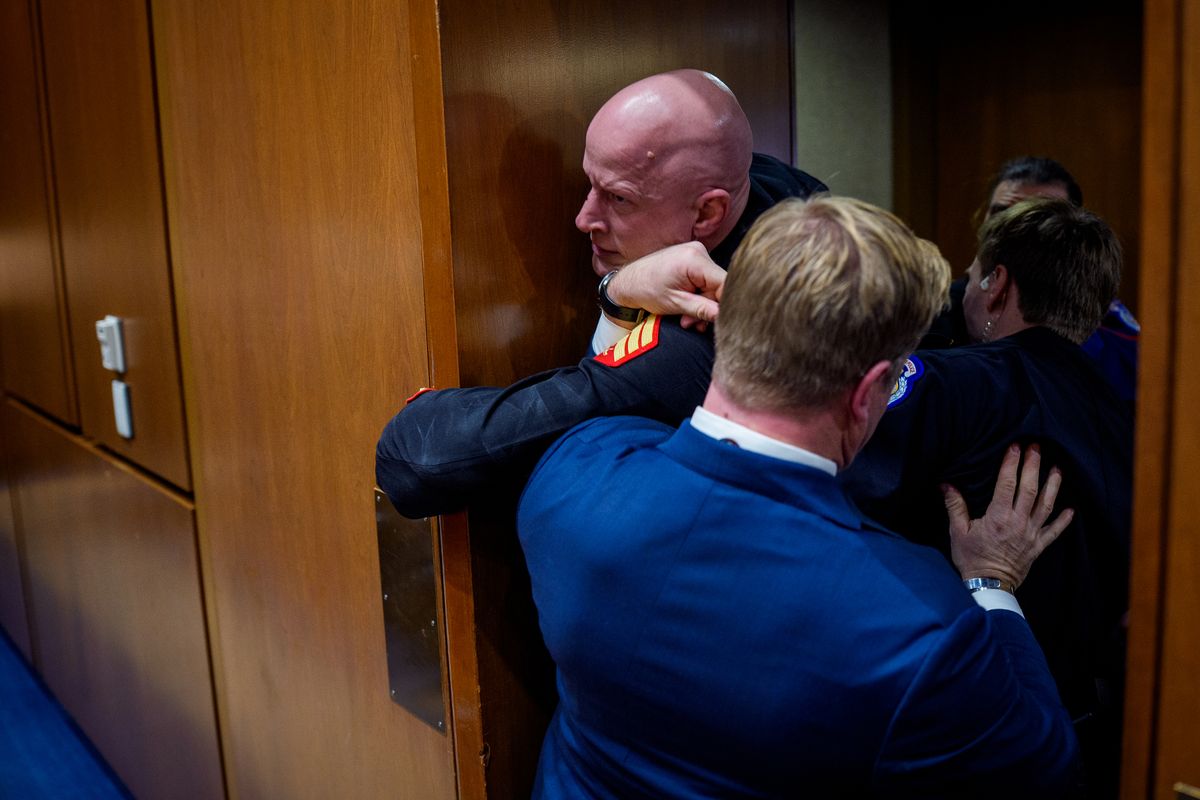
Security officers from the United States Capitol Police quickly moved to remove McGinnis from the room after the interruption. As officers escorted him toward the exit, a struggle occurred near the doorway. During the removal, McGinnis’ arm reportedly became caught in the door hinge, resulting in him suffering from a broken arm.
McGinnis was arrested at the scene and later faced charges including unlawful demonstration and resisting officers. Videos of the incident spread quickly across social media platforms, where viewers debated whether security officers used appropriate force while removing him from the hearing.
The incident has drawn attention in North Carolina because McGinnis has previously been involved in public service and politics within the state. In the past, he worked as a firefighter and even ran as a political candidate in N.C. His background as a Marine veteran has also made the protest particularly notable, as veterans sometimes play important roles in public debates about military decisions.
Protests connected to war and military policy have a long history in the United States, especially during times when Americans disagree about government decisions involving armed conflict. While some people view protest as an important way to express political opinions, others argue that official government proceedings must remain orderly so lawmakers can conduct their work.
For N.C residents, the event highlights how people from the state can become involved in the national political conversation. The incident continued to be discussed online and in new coverage, raising questions about protest rights, security procedures, and the role of veterans in shaping debates about war and peace.